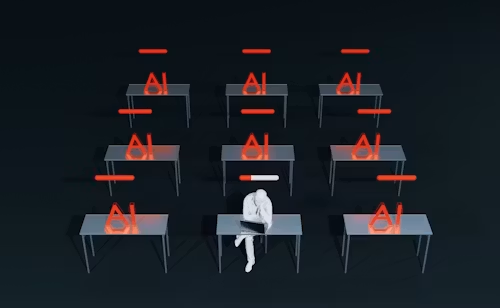
Shadow AI is any AI tool or model employees use for work without going through approval or procurement. Stopping it takes three things: visibility into what's actually being used, a centrally managed allow-list of approved models, and automatic blocking of anything outside policy, enforced at the network or gateway level, not by asking employees to self-report.
What shadow AI actually looks like
Shadow AI rarely looks dramatic. It's an employee signing up for a free-tier chatbot to draft an email, an engineer wiring an unapproved model into a script, or a whole team quietly standardizing on a tool nobody in security has ever heard of.
Individually, each instance seems low-risk. Collectively, it means confidential data is flowing to models outside your control, with no visibility into what's been shared or which providers now hold it.
Why shadow AI spreads so fast
- Most AI tools are free or cheap enough to expense individually, so they never touch procurement.
- Employees adopt tools that make them faster, and will route around a slow approval process rather than wait for it.
- There's rarely a single, visible list of what's already approved, so people assume the tool they found is fine.
How to find shadow AI before you can stop it
You can't block what you can't see. The first step is getting a real picture of every model your organization is touching, not just the ones officially sanctioned. That means visibility at the network or gateway level, since surveys and self-reporting reliably undercount actual usage.
How to stop it without slowing teams down
Publish a real allow-list
Give every department a clear, visible list of approved models for their kind of work, not a single company-wide list that ignores different teams' needs.
Block automatically, not manually
Enforcement that depends on someone in IT noticing unusual traffic will always lag. A governance layer that blocks unapproved models automatically closes the gap in real time.
Make the approved path the easy path
Shadow AI usually wins because it's faster than asking permission. If the approved models are just as accessible, most of the incentive to go around policy disappears.
Common mistakes to avoid
- Announcing a ban with no enforcement. A policy memo without technical enforcement behind it rarely changes behavior, and mostly just tells people not to admit what they're using.
- Blocking everything at once. Sudden, blanket restriction often pushes usage further underground instead of eliminating it.
- Ignoring personal-account usage. Some of the highest-risk shadow AI happens on tools employees sign up for individually, outside any company account.
- Treating this as a one-time sweep. New models launch constantly; shadow AI detection has to run continuously, not as a quarterly audit.
Frequently asked questions
Is shadow AI usually malicious?
Almost never. Most shadow AI comes from employees trying to work faster, not trying to cause harm, which is exactly why blocking without offering an approved alternative tends to fail.
Can shadow AI be detected without monitoring every employee's device?
Yes. Gateway-level visibility into model and API traffic catches the large majority of shadow usage without needing endpoint-level monitoring of individuals.
Does stopping shadow AI slow down legitimate work?
Not when it's done through an allow-list plus fast approval path. The goal is redirecting usage toward governed, equally capable models, not removing AI access.
How is shadow AI different from normal AI adoption?
The difference is visibility and approval. Adoption becomes 'shadow' the moment it happens outside any process your security or governance team can see or account for.